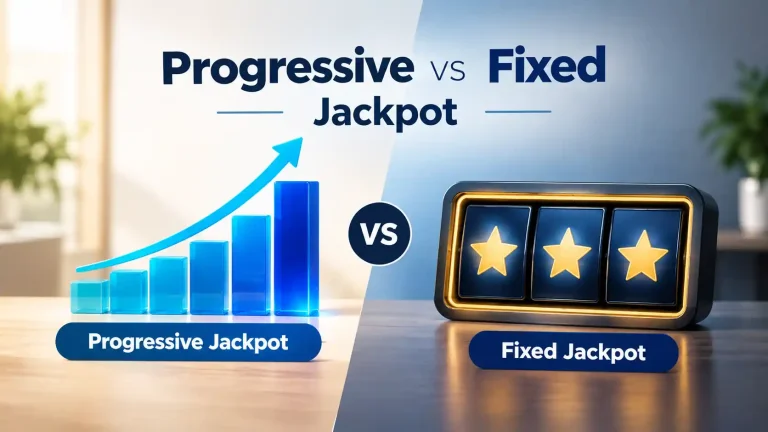
Jackpot slots can use different prize structures, and understanding them helps readers interpret how a game’s top prize works. The main difference in progressive vs fixed jackpot slots is how the jackpot amount is set and whether it can grow over time.
A progressive jackpot can increase as contributions are added to its prize pool, while a fixed jackpot has a predetermined amount that does not automatically grow through gameplay. However, both types can have specific eligibility rules, qualifying combinations, and payout conditions. Understanding these differences starts with looking at how each jackpot works.
What Is a Progressive Jackpot?
A progressive jackpot is a prize that can grow over time. A portion of qualifying game activity may contribute to the jackpot pool, depending on the game’s design and rules. As contributions accumulate, the displayed prize may increase until a qualifying event awards it.
Progressive jackpot slots can operate in different ways. A standalone progressive jackpot is connected to a single game or machine. A linked progressive jackpot combines contributions from multiple eligible games or machines, allowing them to contribute to the same prize pool.
The displayed amount may change as contributions are added or when the jackpot is awarded. Some games may also have a starting value or other limits set by their rules.
Importantly, a growing prize does not mean a particular player is more likely to trigger it. The jackpot amount and the conditions for awarding it are separate parts of the game’s design.
What Is a Fixed Jackpot?
A fixed jackpot has a predetermined prize amount that does not automatically increase as people play. Its value is defined by the game’s prize structure rather than by an accumulating pool of gameplay contributions.
For example, a game might specify a fixed top prize for a particular qualifying combination. The actual amount and the conditions required to qualify depend on the individual game’s rules.
Some fixed jackpot slots also offer several prize levels. A game might have smaller prizes for certain combinations and a larger top prize for another combination. These levels are defined in advance, although the exact structure varies by game.
A fixed jackpot is therefore generally easier to interpret in terms of its stated prize amount. However, the displayed amount alone does not explain how the prize is triggered or who qualifies for it.
Progressive Jackpot vs Fixed Jackpot: Key Differences
The following table highlights the main differences between these two jackpot structures.
| Feature | Progressive Jackpot | Fixed Jackpot |
| Jackpot amount | Can grow over time | Predetermined amount |
| Prize changes | May increase through contributions | Does not automatically grow through gameplay |
| Prize pool | May be standalone or linked | Usually defined by the game’s prize structure |
| Contribution mechanism | Eligible activity may add to the pool | No automatic progressive contribution is required |
| Payout conditions | Depend on the specific jackpot rules | Depend on the specific jackpot rules |
| Common formats | Standalone and network-linked jackpots | Fixed top prizes or multiple fixed prize levels |
These are general distinctions rather than universal rules. Individual games may combine different prize features, so the published game information remains the most reliable guide.
How Do Jackpot Triggers Differ?
Jackpot triggers are the conditions a player must meet for a jackpot to be awarded. These conditions can vary between progressive and fixed jackpot slots.
A game may require a particular symbol combination, a bonus feature, a special round, or another defined event. Some jackpots may be linked to a specific feature rather than the standard reel outcome.
For progressive jackpots, the rules explain how the growing prize is awarded and which game activity qualifies. In linked systems, eligibility may also depend on whether the game or machine belongs to the relevant network.
Fixed jackpots have their own qualifying conditions. A predetermined prize amount does not necessarily mean the prize is awarded on every appearance of a particular symbol. The game may specify a precise combination, sequence, or feature requirement.
The key point: Neither jackpot type has one universal trigger. Always distinguish the prize structure from the conditions needed to qualify for the prize.
Which Features Should You Check?
Before interpreting a jackpot display, review the following details in the game’s information or rules.
- Jackpot eligibility: Check which games, modes, or features qualify for the jackpot.
- Displayed prize amount: Confirm whether the amount is fixed, progressive, or subject to a stated starting value.
- Qualifying combinations: Read the exact symbol combinations or feature requirements.
- Game rules: Check any stated conditions, restrictions, and prize-awarding procedures.
- Jackpot structure: Determine whether the prize pool belongs to one game or is linked across multiple games.
- Prize levels: Check whether the game offers one jackpot or several prize tiers.
- Updated information: Look for the current rules and any explanations of how the displayed amount is calculated.
These checks help clarify what a jackpot figure represents without making assumptions about the likelihood of receiving it.
Conclusion
Understanding progressive vs fixed jackpot slots comes down to how their prize amounts are structured. Progressive jackpots can grow as contributions accumulate, while fixed jackpots use predetermined prize amounts. Either type may have multiple eligibility requirements and different ways of awarding a prize.
When comparing them, focus on the prize pool, displayed amount, qualifying conditions, and official slot game rules. A larger or growing jackpot does not, by itself, indicate a greater likelihood of winning. The specific game mechanics are essential to understanding what each jackpot offers and how it operates.