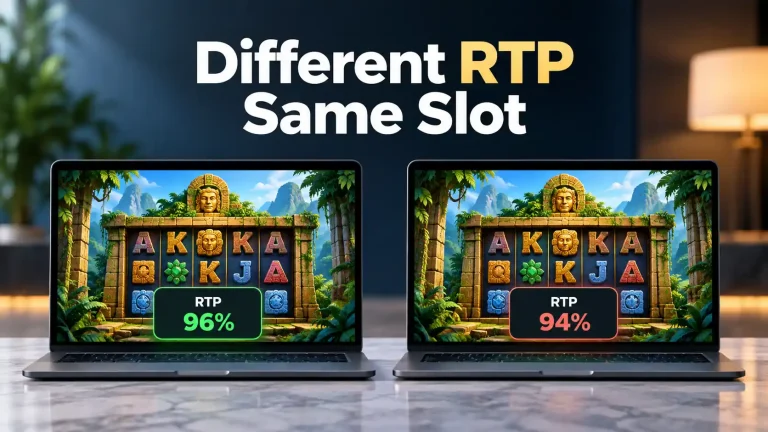
The same slot can sometimes have different RTP percentages because a game developer may produce more than one approved mathematical configuration of the title. Depending on the provider, operator, technical setup, market, and local rules, two casinos may therefore offer visually similar versions of a game with different theoretical returns.
This is one reason people may encounter different RTP same slot information when comparing games across platforms. It does not mean every slot has several RTP versions, nor does it mean a casino can freely enter any RTP percentage it wants.
What Does RTP Mean in a Slot Game?
RTP, or Return to Player, is the theoretical percentage of wagers that a game is designed to return over a very large number of rounds. It is not a prediction of what one player will receive.
For example, a theoretical RTP of 96% represents a long-run mathematical return of 96 units for every 100 units wagered across the model’s statistical sample.
In a simplified comparison, a 96% theoretical RTP corresponds to a 4% mathematical house advantage.
That does not mean someone who wagers ₹100, £100, or $100 should expect to receive 96 back.
Individual sessions can finish far above or below the theoretical percentage. RTP becomes meaningful across a much larger sample of play, while short-term results can vary substantially.
How Can the Same Slot Have More Than One RTP?
A game developer can create different mathematical configurations of the same basic slot.
These versions may retain the same title, artwork, interface, and general features while using different underlying game mathematics. Depending on the specific game, differences could involve paytable values, prize probabilities, feature calculations, or other mathematical elements.
Which configurations are available can also depend on the market in which the game is supplied. Gambling software may be subject to different regulatory, testing, and disclosure requirements across jurisdictions.
There is no single process used by every developer or platform. Some titles may have several configurations, while others may have only one.
Who Actually Sets the RTP?
Responsibility is better understood as a chain involving the developer, operator, technical platform, and applicable regulatory framework.
Game Developer
The game provider creates the mathematical model behind the slot. If multiple RTP configurations exist, those configurations originate with the game’s design rather than being arbitrary percentages invented by the casino.
The developer may make one or several versions available, depending on the title, technical integration, and market.
Casino or Operator
Where a provider or platform supports multiple configurations, an operator may be able to use one of the versions made available to it.
The operator’s available choices can depend on the provider, integration, licence conditions, platform setup, and jurisdiction. In some cases there may be several available configurations; in others there may be only one.
It should therefore not be assumed that every casino can change the RTP of every game.
More importantly, an operator generally works with mathematical configurations supplied through the game or platform rather than freely typing in any RTP percentage it wants.
Regulators and Testing Laboratories
Requirements differ between regulated markets, but gambling software may need to meet technical standards or undergo testing before particular configurations can be offered.
For example, the UK Gambling Commission requires relevant licensed remote gambling software to meet technical and testing standards and requires appropriate information about the likelihood of winning to be available to players.
Other jurisdictions may use different testing, certification, disclosure, or approval processes.
Independent testing laboratories may also examine game mathematics and theoretical RTP as part of applicable testing or compliance processes.
Why Would Casinos Use Different RTP Versions?
There is no universal reason.
Where several configurations are available, an operator may select from versions supplied through the developer, aggregator, or platform. Which options are available can depend on provider agreements, technical arrangements, local requirements, regulatory conditions, and commercial decisions.
An operator cannot necessarily choose from every RTP configuration a developer has created, and some games may provide no configuration choice at all.
A lower RTP alone is therefore not evidence that a casino has secretly manipulated a game. The important questions are whether the configuration is permitted in the relevant market and whether required information is presented accurately.
Does a Different RTP Change the Slot?
Mathematically, it can.
Visually, the difference may be difficult to notice. Two versions could potentially share the same artwork, symbols, interface, and major features while having different mathematical settings underneath.
How the difference is created depends on the specific game. It could involve changes to prize probabilities, paytable values, bonus mathematics, or another part of the model.
Without provider documentation for a particular title, however, it is not reliable to assume exactly which part has changed.
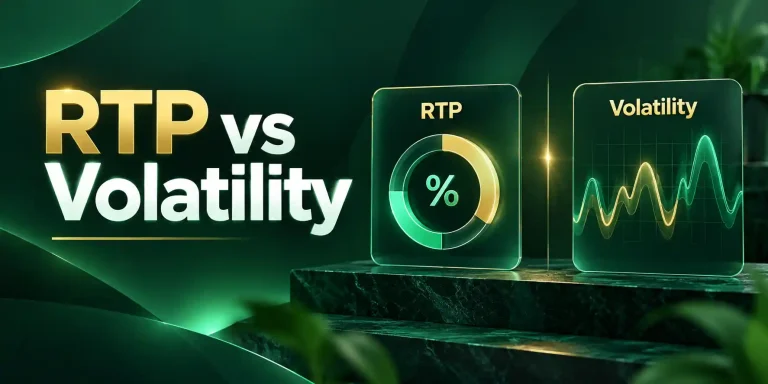
RTP vs Volatility: They Are Not the Same Thing
The RTP and volatility describe different aspects of a slot.
RTP describes its theoretical long-term return.
Volatility relates to how payouts are distributed, including their frequency and size.
A slot could therefore have a particular RTP while still having relatively high or low volatility. Knowing one figure does not automatically reveal the other.
This distinction also helps explain why two games with similar theoretical RTP figures can produce very different patterns of results over shorter periods.
How to Check Which RTP Version You Are Playing
If you find different RTP same slot figures online, check the actual game rather than assuming a percentage from another website applies to your version.
Look at:
- The game’s information or help screen
- Rules and paytable
- RTP information displayed within the game
- Official provider documentation, where available
- Regulatory information supplied with the game
- Operator support if the figure cannot be located
Disclosure requirements vary between jurisdictions, so the information available to players may not appear in exactly the same place on every platform.
The RTP attached to the specific game instance is more relevant than an unsourced percentage copied from elsewhere.
Why Third-Party RTP Figures May Not Match
Two websites can quote different percentages without either figure necessarily describing the version you are currently viewing.
Possible explanations include:
- Multiple legitimate RTP configurations
- Information taken from different markets
- Outdated documentation
- Different versions of the game
- A database showing only one available configuration
- Incorrect or poorly sourced third-party information
For that reason, information displayed within the actual game and official provider documentation should generally carry more weight than an unsourced database entry.
It is also worth checking when a third-party figure was published. A correct percentage for one market or historical version may not describe the game currently available elsewhere.
Does Higher RTP Mean You Will Lose Less?
Not necessarily during an individual session.
All else being equal, a higher theoretical RTP corresponds to a smaller mathematical house advantage when comparing otherwise equivalent configurations. That is a long-term mathematical comparison, not a prediction of what will happen during a particular session.
Short-term results can vary substantially from the theoretical percentage.
Over sufficiently large samples, observed results may tend toward the theoretical model, although there is no guarantee that a particular finite sample will exactly match the stated RTP.
RTP should therefore not be treated as a way to predict individual spins or guarantee a particular result.
A Simple Example of Different RTP Versions
Consider a completely hypothetical slot that a developer has produced in three mathematical configurations:
| Version | Theoretical RTP |
| Configuration A | 96% |
| Configuration B | 94% |
| Configuration C | 92% |
These figures do not represent a real game.
Imagine Casino A offers Configuration A while Casino B uses Configuration B. A player could open what appears to be the same title at both casinos yet see 96% in one game’s information screen and 94% in the other.
The difference would come from the mathematical configuration being used, not simply from changing the game’s name or artwork.
The example does not imply that every game has these options or that every operator can choose between them.
What Should Players Check Before Comparing RTP?
Before concluding that two RTP figures conflict, check:
- Exact game title
- Game developer
- RTP displayed inside the game
- Whether multiple configurations are documented
- Paytable and game rules
- Market or jurisdiction
- Date of any third-party information
- Source of the quoted percentage
- Whether the figure refers to the exact version being played
Most importantly, confirm that the percentage actually refers to the game version you are using.
Conclusion
Seeing different RTP same slot percentages is not automatically an error. Some slot titles are produced with multiple mathematical configurations, and the version available can depend on the game provider, operator setup, platform, market, and regulatory environment.
The most relevant figure is the RTP disclosed for the exact version of the game being used, supported where possible by official game or provider information.
Above all, RTP describes theoretical long-term mathematics. It does not predict the outcome of an individual spin or guarantee what a player will receive during a particular session.